
Canthal Tilt Test
Measure the angle between your inner and outer eye corners for both eyes with automatic roll correction—100% locally.
Upload a photo
Your photo is analysed on your device. If you send it from your phone, it is encrypted end-to-end and deleted within 10 minutes.
Photo tips for the clearest result
- Face straight into the camera with a neutral expression.
- Pull hair back from your forehead and jawline.
- Use even, front-facing light and remove glasses or hats.
- Keep your whole face centered and filling a good part of the frame.
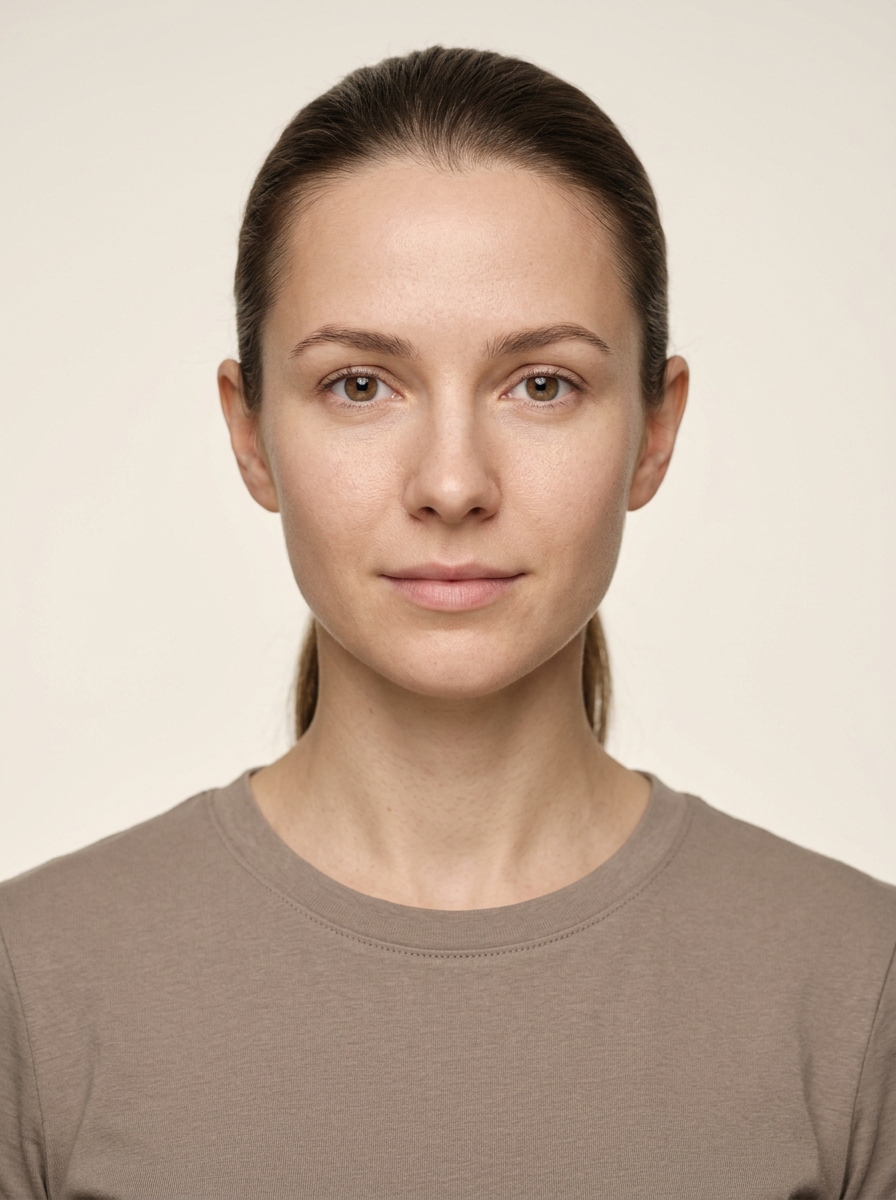
Live output preview
Average tilt
+3.2° · Positive
Inner-to-outer eye corner angle after 3D roll correction
Automatic 3D matrix derotation prevents head-tilt distortion
Step-by-step guide
How to Measure Canthal Tilt Accurately
01 · Level camera
Look straight into the lens
Hold the camera at eye level rather than above or below—looking up or down can shift perceived eye-corner angles.
02 · 3D roll correction
Automatic tilt leveling
The canthal tilt calculator uses MediaPipe’s 3D facial transformation matrix to level head roll before measuring each eye.
03 · Read degrees
Compare left, right & average
Inspect both eye angles in degrees and match your positive, neutral, or negative classification to flattering brow and frame lines.
Reference ranges
Canthal Tilt Calculator Results: Positive, Neutral, Negative
| Tilt Category | Angle Range | Framing & Styling Cue |
|---|---|---|
| Positive Canthal Tilt | Above +2.5° | Outer corner sits higher than inner corner; pairs cleanly with balanced round or soft rectangular frames. |
| Neutral Canthal Tilt | -2.5° to +2.5° | Inner and outer corners sit nearly horizontal; versatile for virtually all optical frames and brow arches. |
| Negative Canthal Tilt | Below -2.5° | Outer corner sits slightly lower; subtle upswept cat-eye or browline frames add crisp upper-outer lift. |
Methodology & privacy
How the Canthal Tilt Calculator Computes Eye Axis Angles
For each eye, our canthal tilt calculator computes the angle between the inner canthus (medial corner) and outer canthus (lateral corner) landmarks after correcting for head roll via the 3D transformation matrix.
Angles above +2.5° are labeled positive, between -2.5° and +2.5° neutral, and below -2.5° negative. These labels describe eye-axis geometry for brow and eyewear styling only—never attractiveness.
Runs 100% locally in your browser via MediaPipe 478-point facial landmarks. Photos and measurements are never uploaded, stored on a server, or used to train AI models. Results are objective geometric style references—never clinical diagnoses or attractiveness ratings.
Read our full 478-landmark methodology & published sources →
Camera distance
Avoid close-up lens distortion
Holding a wide-angle smartphone camera inches from your nose artificially enlarges the center of your face and narrows the temples and ears. Step back to full arm’s length or use a 2× rear lens at eye level for accurate geometry.
Lighting & posture
Face even natural daylight
Harsh overhead shadows or side window light can shift cheek, brow, and jaw boundaries by several millimeters. Keep your chin level, relax your mouth, pull hair off your forehead, and look straight into the lens.
Zero-upload privacy
Processed strictly on device
Unlike cloud apps that upload selfies to remote GPUs, every landmark calculation runs inside WebAssembly in your browser tab. Closing the tab clears image memory immediately—nothing is logged, stored, or shared with third parties.
Deep-dive guides
Related styling & proportion guides
Hunter Eyes vs Prey Eyes: Anatomy & Styling Guide
Compare canthal tilt, upper-lid exposure, and brow position objectively with eyewear and grooming cues.
Read guide →Eye Shapes Chart: All 10 Types Explained
See how positive, neutral, and negative tilt pair with almond, round, hooded, cat, and fox eye shapes.
Read guide →FAQ
Canthal Tilt Calculator FAQ
What is canthal tilt?
Canthal tilt is the angle of the line connecting your inner eye corner (medial canthus) and outer eye corner (lateral canthus) relative to horizontal.
What do positive, neutral, and negative tilt mean?
Positive tilt (> +2.5°) means the outer corner sits higher than the inner corner; neutral (-2.5° to +2.5°) means both corners sit nearly level; negative tilt (< -2.5°) means the outer corner sits slightly lower.
Why does head tilt matter so much?
Even a small head tilt changes raw screen angles. We automatically derotate your landmarks using 3D pose estimation before measuring left and right eyes separately.
Is one canthal tilt better than another?
No. Canthal tilt is simply a geometric descriptor useful for choosing eyeliner direction, brow tail height, and eyeglass frame shapes.
Why can my left and right eye have slightly different canthal tilt degrees?
A 1° to 2° difference between left and right eyes is completely normal in human anatomy and can also increase slightly if your head is turned a few degrees off-center.
Does the canthal tilt calculator store my photo?
Never. All 3D head-roll correction and eye-corner angle math runs locally in your browser with zero server uploads.