Eye Shape Detector: What Is My Eye Shape?
Upload a front-facing photo without glasses to measure eye aperture, lid space, and corner angle—100% in your browser.
Upload a photo
Your photo is analysed on your device. If you send it from your phone, it is encrypted end-to-end and deleted within 10 minutes.
Photo tips for the clearest result
- Face straight into the camera with a neutral expression.
- Pull hair back from your forehead and jawline.
- Use even, front-facing light and remove glasses or hats.
- Keep your whole face centered and filling a good part of the frame.
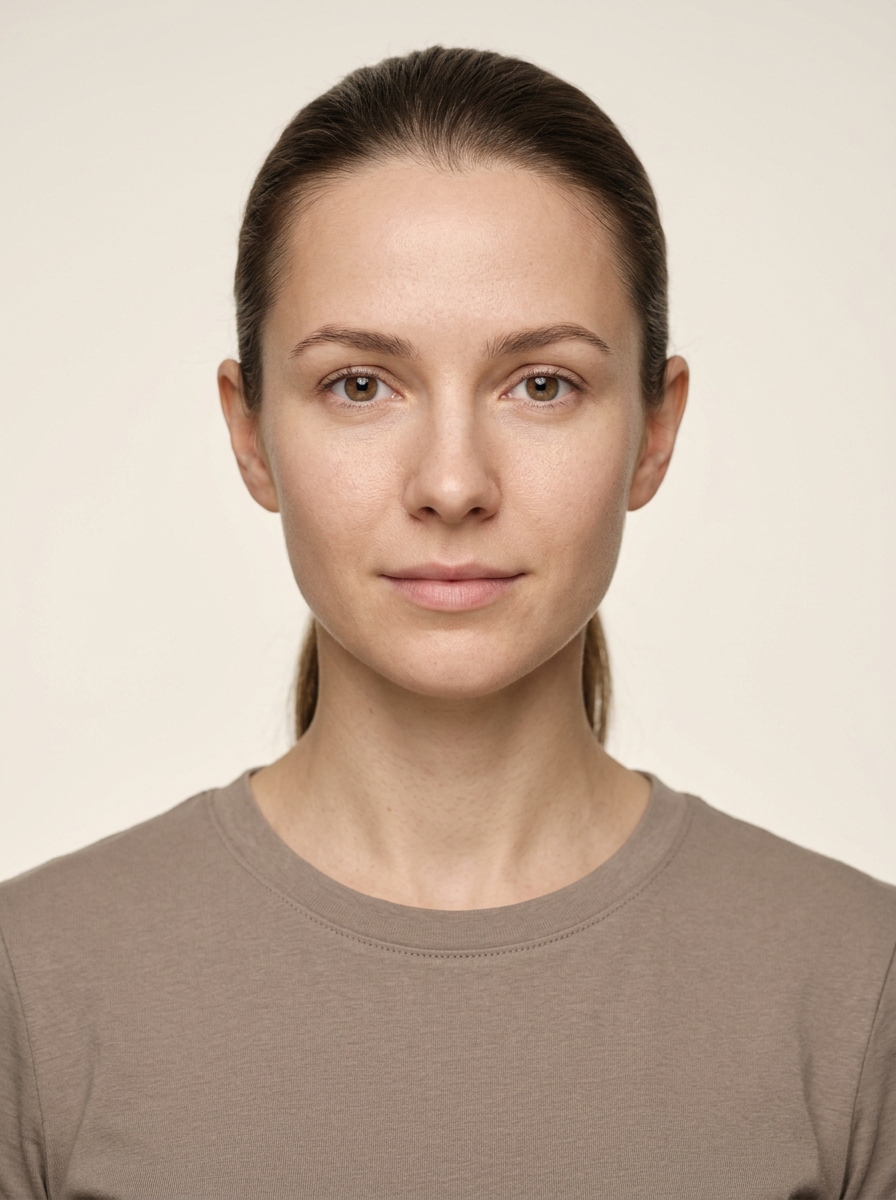
Live output preview
Eye shape
Almond · 91%
Aperture height ÷ width (0.34) with tapered corners
Includes tailored liner placement & eyewear frame guidance
Step-by-step guide
How to Use the Eye Shape Detector
01 · Remove glasses
Keep eye corners visible
Take a relaxed, straight-ahead photo with eyes open naturally and no heavy eye makeup or dark frame reflections.
02 · Local landmark read
Aperture, tilt & lid space
Your browser measures eye height-to-width ratio, inner-to-outer corner angle, and upper-lid crease space.
03 · Apply styling cues
Match liner & eyewear frames
Save your eye shape into your BodyType Report profile and use the frame and makeup notes tailored to your geometry.
Reference ranges
6 Eye Shapes Compared: Geometry & Framing Cues
| Eye Shape | Key Visual Cue | Best Frames & Liner |
|---|---|---|
| Almond | Balanced oval aperture, gently tapered corners | Versatile—almost any optical frame and classic soft wing. |
| Round | Higher vertical opening, visible white below iris | Slim rectangular or subtle cat-eye frames; elongated outer liner. |
| Hooded | Upper brow-bone fold overlaps mobile lid crease | Lightweight frames below the brow line; fine tightlining. |
| Monolid | Smooth upper lid without a deep crease fold | High-bridge or nose-pad frames; soft diffused gradient liner. |
| Upturned | Outer corner sits higher than inner corner | Round wire or soft geometric frames; balanced lower-lash shading. |
| Downturned | Outer corner sits slightly below inner corner | Subtle cat-eye or browline frames; lifted outer-third wing. |
Methodology & privacy
How the Eye Shape Detector Reads Your Eyes
Our eye shape detector estimates eye geometry from three signals on roll-corrected 478-point landmarks: eye aperture height-to-width ratio, inner-to-outer corner angle (canthal tilt), and upper-lash-to-brow lid spacing.
Because eyelid crease visibility varies with expression and camera angle, use the top match and runner-up together as styling references for liner placement and frame height.
Runs 100% locally in your browser via MediaPipe 478-point facial landmarks. Photos and measurements are never uploaded, stored on a server, or used to train AI models. Results are objective geometric style references—never clinical diagnoses or attractiveness ratings.
Read our full 478-landmark methodology & published sources →
Camera distance
Avoid close-up lens distortion
Holding a wide-angle smartphone camera inches from your nose artificially enlarges the center of your face and narrows the temples and ears. Step back to full arm’s length or use a 2× rear lens at eye level for accurate geometry.
Lighting & posture
Face even natural daylight
Harsh overhead shadows or side window light can shift cheek, brow, and jaw boundaries by several millimeters. Keep your chin level, relax your mouth, pull hair off your forehead, and look straight into the lens.
Zero-upload privacy
Processed strictly on device
Unlike cloud apps that upload selfies to remote GPUs, every landmark calculation runs inside WebAssembly in your browser tab. Closing the tab clears image memory immediately—nothing is logged, stored, or shared with third parties.
Deep-dive guides
Related styling & proportion guides
Eye Shapes Chart: All 10 Types Explained
Compare almond, round, hooded, monolid, upturned, downturned, cat, fox, and doe eye shapes with liner & lash maps.
Read guide →Hooded Eyes vs Non-Hooded Eyes Guide
Take the 10-second mirror test and see the best eyebrow shapes, liner techniques, and glasses for hooded lids.
Read guide →FAQ
Eye Shape Detector FAQ
Which eye shapes does this tool detect?
It evaluates six common styling categories—almond, round, hooded, monolid, upturned, and downturned—by combining eye height-to-width ratio, canthal tilt, and upper-lid spacing.
Can my eyes fit more than one category?
Yes. For example, eyes can be both almond and slightly hooded. That is why we show your runner-up match alongside the top shape.
Should I remove glasses before uploading?
Yes. Frames and lens reflections can obscure eye corners and eyelid landmarks.
Is my photo uploaded?
No. Everything runs locally in your browser via MediaPipe.
How does eye shape affect eyeliner and eyeglass frame choices?
Round eyes balance cleanly with slim rectangular frames and elongated outer-corner liner; hooded and monolid eyes shine with tightlining and thin vertical frames that do not crowd the brow; downturned eyes lift with subtle cat-eye frames.
Why does the eye shape detector show a runner-up shape?
Real eye anatomy blends traits—such as almond shape combined with mild hooding. Showing both your primary match and runner-up lets you combine the most helpful styling cues.
Why are my two eyes slightly different shapes?
Mild left-right lid crease or aperture differences are completely normal in human anatomy and often become more noticeable when tired. You can measure bilateral eye alignment directly in our Face Symmetry Test.